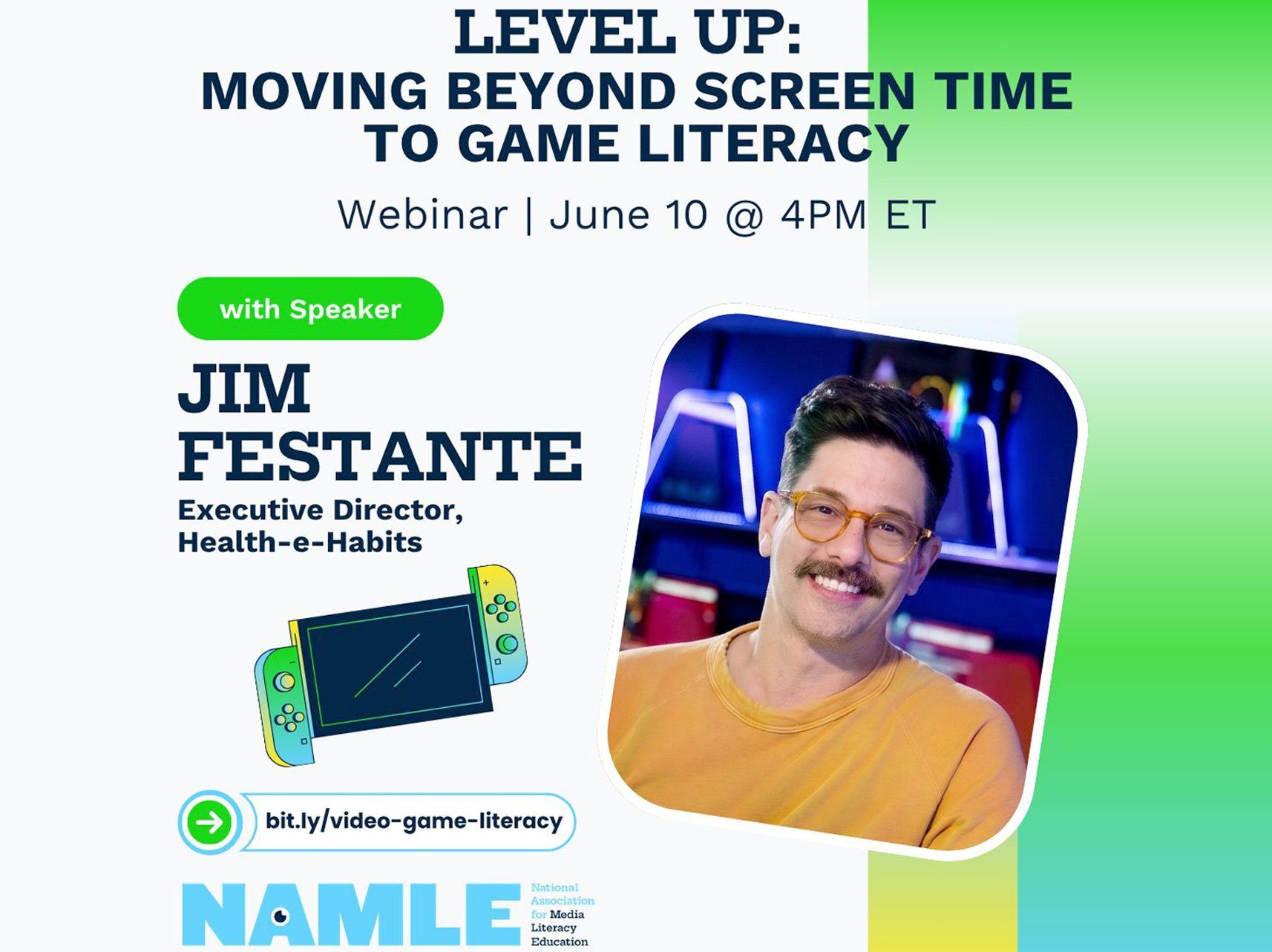


Presenting to parents is about household survival, but leading a workshop for the National Association for Media Literacy Education (NAMLE) required a different approach. Rather than manage friction, we spoke about digital architecture.
Media literacy often treats all “screen time” as a monolith. Drawing on over twenty years in the video game industry, our presentation gave educators the tools to deconstruct that myth. We contrasted the healthy, closed-loop design of classic Nintendo games, which respect the user’s time with clear endings, against the inherently dangerous, infinite architecture of platforms like Roblox. When students understand how algorithmic lobbies are engineered to harvest their attention, the conversation shifts from a screen-time lecture to an empowering lesson in corporate literacy.
We also showed how the same approach works in a classroom. If educators simply tell teens their favorite platforms are bad, students tune out. When teachers first acknowledge the reality of students’ digital lives, including the real social cost of logging off, they earn the trust it takes to introduce structural boundaries later. It shows students we aren’t anti-technology, just pro-intentionality.