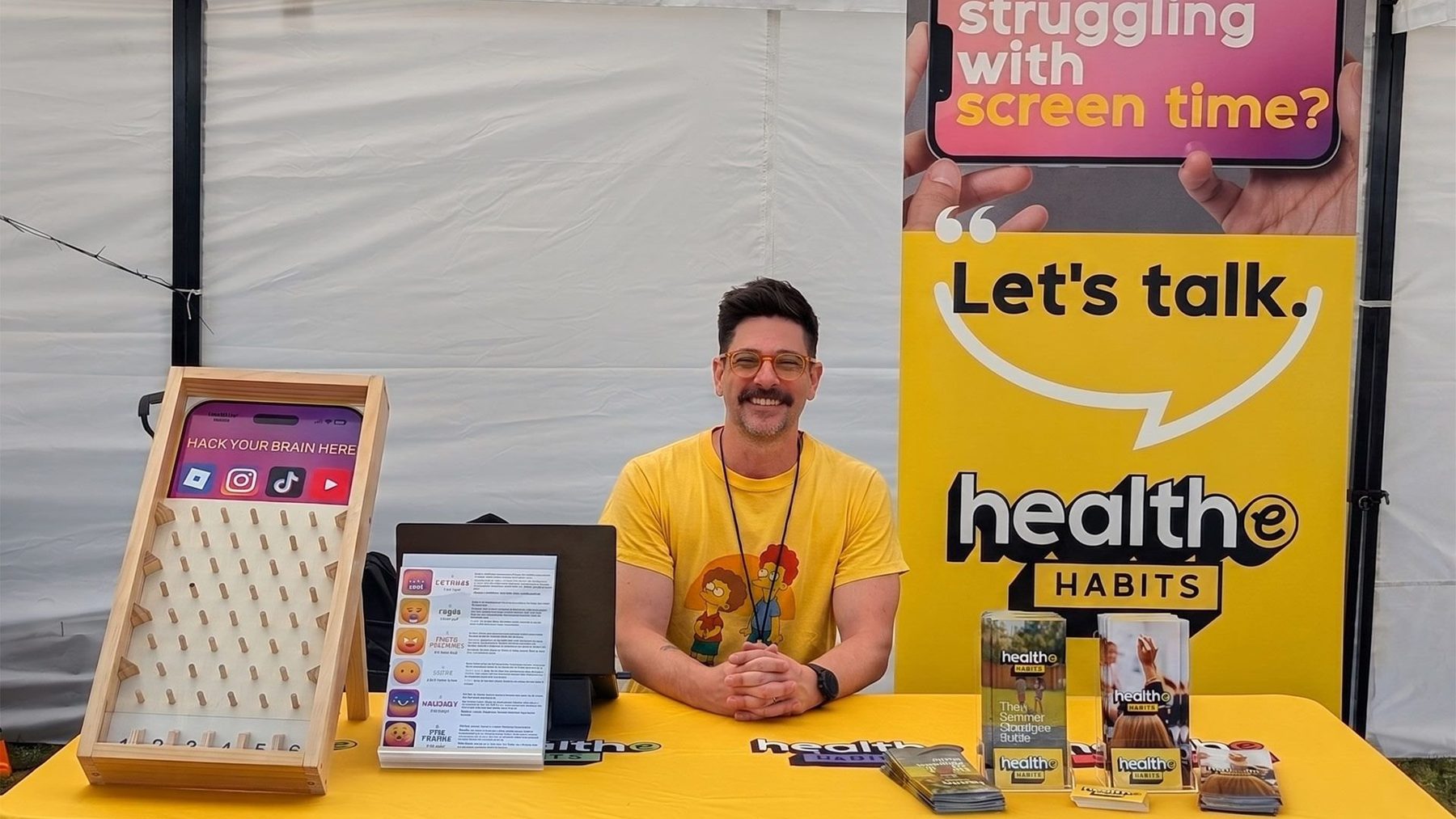
When Health-e-Habits took the stage at the Los Angeles City of STEM Maker Faire, we addressed a seeming paradox: How does a media literacy organization dedicated to fighting the attention economy fit into a festival celebrating technology and engineering?
They actually go hand in hand. STEM is one of the best antidotes we know to passive screen time.
The platforms dominating our kids’ screens are engineered to keep them completely passive. Infinite scrolling and manipulative game lobbies ask for your time and almost none of your thinking. STEM works the other way. Whether it is coding a new program, engineering a bridge, or cooperating on a robotics team, STEM demands active problem-solving, critical thinking, and strategy.
Media literacy is the first step in this process. By teaching students how to decode the internet and recognize when an algorithm is trying to hijack their attention, we break the cycle of passive consumption. Once their attention is their own again, STEM gives that energy somewhere to go. Kids stop being passive users of the digital world and start building things in it.