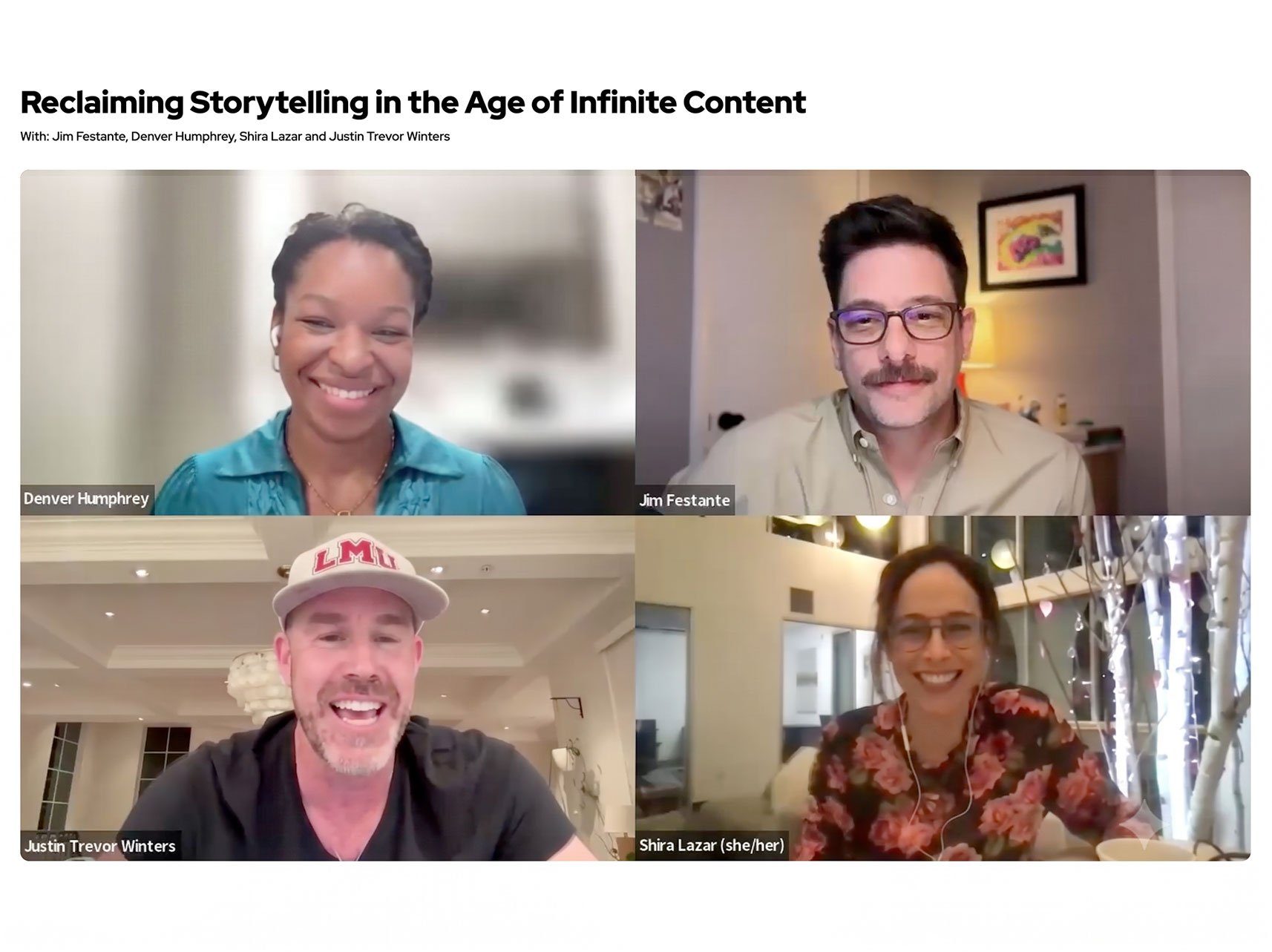

When you think of the Sundance Film Festival, you usually think of independent cinema, red carpets, and groundbreaking narratives. But recently, Health-e-Habits was invited to participate in a Sundance panel that focused on a much darker reality of modern media: the fact that we are drowning in “Content” while starving for “Story.”
I had the privilege of joining a brilliant group of experts, including digital culture pioneer Shira Lazar, youth advocate and filmmaker Denver Humphrey, and AI creative strategist Justin Trevor Winters, to talk about the future of digital media. The conversation centered on the psychological toll of the infinite scroll.
For parents and educators trying to manage screen time, the biggest takeaway from the panel is the difference between Story and Content.
A “Story” is built on a narrative arc. It has a beginning, a middle, and a definitive end. It’s meant to be shared, and it leaves you with a sense of meaning and completion, much like reading a great book, watching a film, or playing a beautifully designed video game.
“Content,” on the other hand, is the fuel of the attention economy. It’s the never-ending stream of quick hits an algorithm serves up to keep you scrolling, and it’s designed to leave you just unsatisfied enough to swipe to the next video.
On the panel, we discussed how filmmakers can reclaim narrative storytelling in a vertical video world. But for those of us at home or in the classroom, the mission is different: we have to teach our kids how to tell the difference.
When kids can tell whether a platform is serving them Content or offering them a Story, the algorithm loses a lot of its pull. That means pushing the industry to do better, and teaching our kids to hold out for the whole story.